
Table of contents
Delhi has group classes, institutes, directories and one-to-one teachers, and listings rarely say which you are buying. Here is how they compare, and where Mikaya’s course fits.
Updated September 2026.
Mikaya’s candle making course in Delhi is one-to-one, taught by founder Bhumika Sadana over three live one-to-one sessions, with six months of support and a certificate of completion from Mikaya India. It costs ₹4,499 without the kit or ₹6,499 with it, in Delhi or online.
- One-to-one teaching in Delhi or live online, taught by founder Bhumika Sadana.
- ₹4,499 without the kit, ₹6,499 with it.
- Compare any course by fee per live hour and by who looks at your batches.
Why Mikaya’s course stands out in Delhi
The teacher looks at your batch, not a slide. Frosting, tunnelling and sinkholes usually trace back to wick size, pour temperature or cooling. Finding which one is yours takes someone watching you pour.
- three live one-to-one sessions: a theory session of 2+ hours, a practical of 3+ hours, then a doubt session once you have practised.
- Candles, wax melts, tablets and sachets, plus packaging and labelling.
- six months of support and a certificate of completion from Mikaya India.
- ₹4,499 without the kit, or ₹6,499 with the materials kit, scale and thermometer. The fee is the same online or in person.
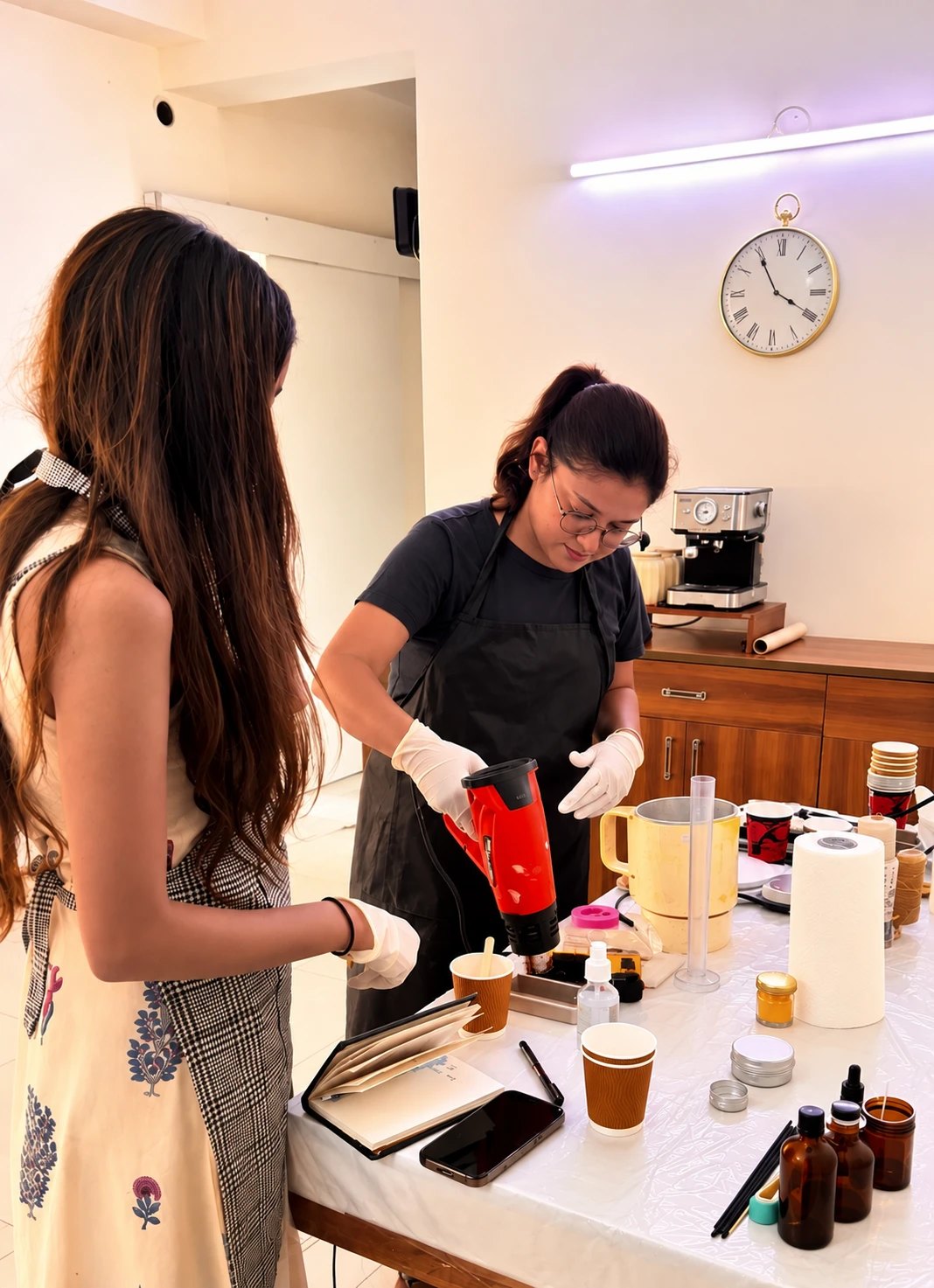
Studio details are on the Delhi course page, and the full format is on the candle making course page.
What you learn, compared with any Delhi syllabus
Here is what the course covers, so you can compare it line by line with any other syllabus.
- Wax types, wicks, fragrance load and pour temperature.
- Candles in every form, plus wax melts, tablets and sachets.
- Packaging and labelling.
- A troubleshooting session on your own batches.
The faults the course teaches you to fix are the ones that ruin most first batches:
- Surface faults: frosting, wet spots, rough tops, cracking and sweating.
- Structure faults: sinkholes, air pockets, layer separation and pulling from the jar.
- Burn faults: tunnelling and wick problems.

Choosing between group, one-to-one and recorded
Delhi has all four formats. Each fits a different need, so match the format before you compare fees.
| Format | Strength | Watch out for |
|---|---|---|
| Group class | Lower fee, other learners | Less time on your own batch |
| One-to-one live | Faults found in your own batches | Higher fee than group |
| Recorded video | Low cost, learn at any hour | Nobody to ask when it goes wrong |
| Institute certificate course | Long, structured syllabus | Check hours, class size and who certifies |
Compare fees by the live hour, not the headline
A low fee for a short group demo is not cheaper than a higher fee for hours of one-to-one teaching. Put the numbers in and see.
What does a course really cost per live hour?
Two fees can look alike until you divide by the hours you are actually taught.
How Delhi options compare
| Option | Lists | Good for | Worth checking |
|---|---|---|---|
| Mikaya India | One-to-one, 3 live sessions, 6 months of support, certificate | Faults found in your own batches | Fee is higher than a recorded video course |
| Craft Tree Academy | Online and offline classes, government certificate mentioned | An institute with several batches | A running discount banner makes the real fee hard to compare. Ask class size and live hours |
| Himanshu Art Institute | Candle making listed at 2 months | A longer, structured course | A two month commitment. Ask hours per week and how many share the class |
| UrbanPro | Directory of tutors and classes | Comparing many tutors | A listing, not a course. Quality varies by tutor, so vet each one |
| Justdial | Directory of local classes | Finding something near you | A listing, not a course. Syllabus and class size are yours to chase |
For a wider list, VedaOils publishes candle making institutes across India.
Who teaches, how many students share the class, whether you pour your own, who issues the certificate, and how long support lasts.
Who it suits, and who it does not
It suits you if you want a teacher looking at your own batches, or if your candles already frost, tunnel or sink.
It may not suit you if you want the lowest possible fee, a group day out, or a diploma with a government stamp. For those, a recorded course or a group class is a fairer choice.
What you make in the practical
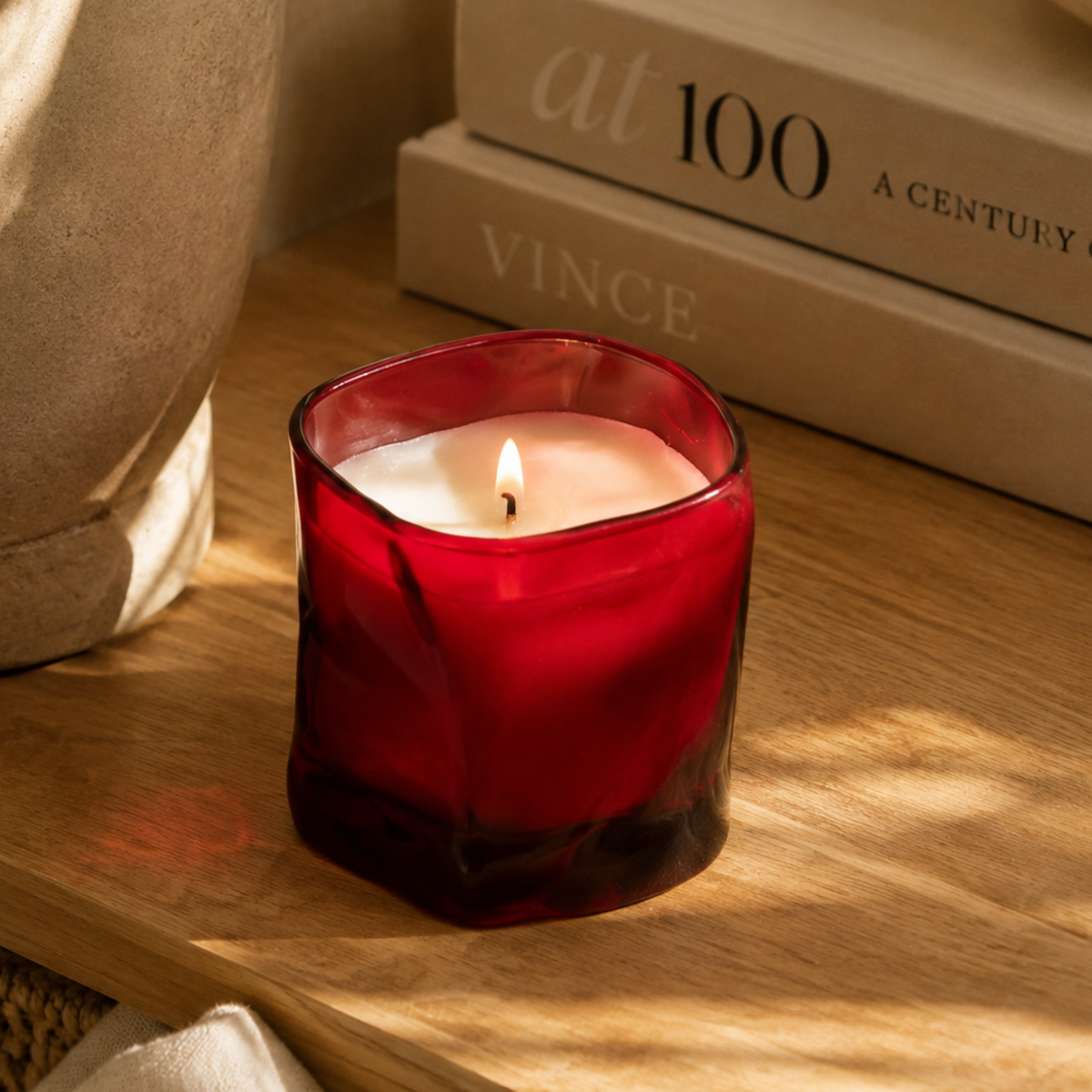
These are the kinds of candles you learn to pour, alongside photos from Mikaya sessions.

Which format suits you?
Which Delhi course format suits you?
Group, one-to-one or self-paced: decided by where you are stuck today.
Where are you with candles right now?
What do you want most from the teacher?
How do you plan to use the skill?
The bottom line
If you are in Delhi and want a teacher watching you pour, Mikaya’s one-to-one course is the strongest fit.
If budget comes first, a group class is a fair start. Either way, ask the five questions above before you pay.
Reading more first? See the guide to starting a candle making business in India, or how candle waxes differ.
Which is the best candle making course in Delhi?
It depends on how you want to learn. For one-to-one teaching on your own batches, Mikaya’s course is the strongest fit in Delhi. Group classes suit a lower budget. Compare teacher, class size, practical work, certificate and support.
How much does a candle making course in Delhi cost?
Fees vary with format and hours. Mikaya’s one-to-one course is ₹4,499 without the kit or ₹6,499 with the materials kit, scale and thermometer. Compare the fee per hour of live teaching, not just the headline price.
Are there candle making classes near me in Delhi?
Yes. Mikaya’s sessions run one-to-one at its Delhi studio, and directories such as UrbanPro and Justdial list other local classes. If travel is hard, the same course runs live online.
Can I attend the Delhi course in person?
Yes. Sessions run one-to-one at the Mikaya Delhi studio, or live online if you prefer. The fee is the same either way. You can bring your own materials or use Mikaya’s on the day at cost.
Do I get a certificate?
Yes. You receive a certificate of completion from Mikaya India when you finish all sessions. It records what you learned and is not a licence to sell, which you do not need for handmade candles.
How long is the support after the course?
You get six months of support after your last session, so you can ask about your own batches as you practise.
Is one-to-one better than a group class for beginners?
Both work. Group classes cost less and give you other learners to compare with. One-to-one suits you if your candles frost, tunnel or sink, because the teacher can find the cause in your own batches.
Do I need experience before joining?
No. Mikaya starts from the fundamentals, and many students who already make candles join to fix frosting, tunnelling or sinkholes.
No questions yet. Be the first to ask.