

Table of contents
You light a candle before a hard phone call, half hoping the room will do some of the emotional work for you. Twenty minutes later you catch yourself calmer, and you cannot tell if that is the fragrance or just the sitting down.
That uncertainty is fair. Aromatherapy sits in an odd spot: real neuroscience on one side, a wellness industry that oversells it on the other. Here is the honest version, with the actual research attached.
Aromatherapy works, but modestly and specifically. Scent reaches the brain's emotional centres faster than any other sense, and compounds in lavender and rosemary show measurable effects in clinical trials.
It will not replace sleep, medication or therapy. Used in one context consistently, it becomes a genuine conditioned cue over time.
- Smell is the only sense with a direct line to the brain's emotion and memory centres, skipping the thalamus entirely.
- Lavender and rosemary have the strongest evidence behind them, real trials, not just pleasant association.
- Aromatherapy does not touch the immune system or hormones, whatever a label claims.
- The most underused lever is consistency: the same scent, in the same context, builds a genuine trigger over time.
- Format matters less than people assume. A candle, diffuser or wax melt all reach the same pathway.
🧠 Why Scent Skips a Step Every Other Sense Takes
Sight, sound and touch all pass through the thalamus first, the brain's relay station, before anything reaches the parts that handle emotion. Smell does not queue there.
Odour molecules connect straight to the amygdala and hippocampus, the regions behind emotion and memory, before your conscious mind has registered what you smelled.
A 2022 review in Frontiers in Pharmacology confirms this direct nose to brain pathway is why inhaled compounds can shift mood and stress markers, not marketing language.
What the Research Actually Supports
🌸 Lavender: the most studied, most consistent
Lavender contains linalool, a compound that interacts with GABA-A receptors, the same receptor family targeted by anti-anxiety medication, at a far gentler level.
A meta-analysis of 22 randomised trials in Asian Nursing Research found lavender inhalation measurably lowered self-rated anxiety and physiological stress markers across a wide range of settings, from surgery waiting rooms to ICUs.
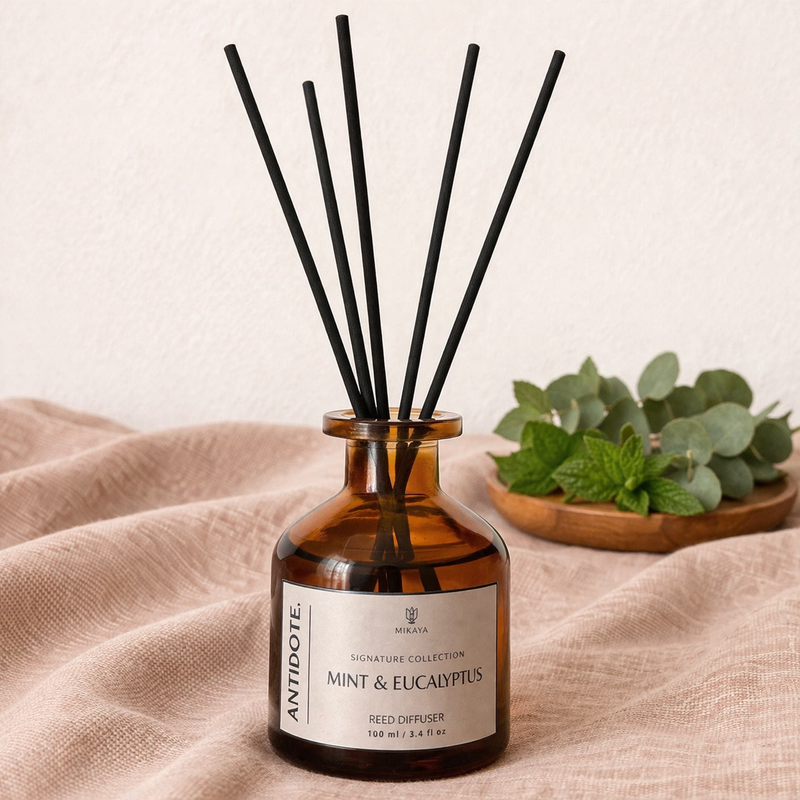
A reed diffuser running quietly in a bedroom is genuinely one of the better-evidenced uses of home fragrance. Not because it looks nice, though it does, but because the trials back it.
🌿 Rosemary: for focus, not just alertness
Researchers at Northumbria University measured blood levels of 1,8-cineole, a rosemary compound, against cognitive task performance in twenty volunteers. Higher blood concentrations tracked with faster, more accurate results.
The proposed mechanism is straightforward: 1,8-cineole appears to slow the breakdown of acetylcholine, a neurotransmitter central to memory and attention.
🍊 Citrus: a thinner but real case for mood
Bergamot and sweet orange have smaller trials linking inhalation to lower physiological stress markers and better self-reported mood. The evidence base here is real but noticeably thinner than lavender's, so treat citrus as a mood nudge, not a proven intervention.
🌱 Peppermint: the unexpected one
A study in the Journal of Sport and Exercise Psychology found forty athletes exposed to peppermint odour showed increased running speed, grip strength and push-up counts compared to a no-odour condition.
The proposed mechanism is mild bronchodilation, peppermint appears to relax airway muscle slightly, which may explain the physical performance bump.
| Scent | Best-supported effect | Evidence strength | Best used in |
|---|---|---|---|
| 🌸 Lavender | Lower anxiety, better sleep | Strong, multiple RCTs | Bedroom, evening |
| 🌿 Rosemary | Focus, cognitive speed | Moderate, consistent | Home office, desk |
| 🍊 Bergamot, citrus | Mood lift, stress reduction | Moderate, smaller trials | Mornings, kitchen |
| 🌱 Peppermint | Alertness, physical output | Moderate, replicated | Workspace, workouts |
| 🌼 Chamomile | Mild calming effect | Limited, small studies | Evening wind-down |
| 🪵 Sandalwood | Subjective relaxation | Emerging, early stage | Living room, meditation |
🚫 What Aromatherapy Does Not Do
The wellness industry has a habit of stretching evidence past what it can carry. Here is the honest boundary.
Aromatherapy does not meaningfully boost your immune system, kill airborne bacteria, or balance hormones. The olfactory pathway reaches emotional centres in the brain, not the endocrine or immune system.
A 2020 review cited by the Cleveland Clinic found no clear benefit for dementia symptoms specifically, a reminder that effects vary by condition and do not generalise automatically.
The "therapeutic grade" label means nothing. Independent aromatherapy resources are consistent on this: no government body or industry organisation grades or certifies essential oils in the United States. Any brand can print it.
What actually matters is ingredient transparency and how a product is made, not a label on the box.
Peppermint, tea tree, citrus, eucalyptus, cinnamon, pine and ylang ylang oils are toxic to cats and dogs, both inhaled and absorbed through the skin, per VCA Animal Hospitals. Ventilate well and check specific oils before diffusing around animals.
✨ The Lever Most People Skip
The deepest mechanism in home aromatherapy is not the oil. It is conditioned association, the same principle behind Pavlov's dogs, well documented in the neuroscience literature on scent and reward.
Use a fragrance consistently in one context, before sleep, during deep work, and the brain starts pairing the smell with that state. Over several weeks of consistent use, the scent alone begins triggering the state, before you have consciously processed anything.
The first time you use a new sleep scent, make the evening genuinely restful, not a stressful Tuesday. Emotionally meaningful moments seed the association faster.
This means the scent you pick matters less than how deliberately you use it. A modestly evidenced oil, used with real consistency, will outperform a well-researched one reached for at random.
Does Aromatherapy Actually Work, or Is It Placebo?
Both, and the split matters. Lavender and rosemary show effects on physiological measures like cortisol and blood compound levels that exceed placebo. For many other oils, current trials cannot yet separate real chemistry from expectation.
Is Aromatherapy Safe With Pets and Kids in the House?
With care. Several common oils are toxic to cats and dogs even diffused, not just ingested. Ventilate rooms well, keep any burning candle out of reach, and check a specific oil before using it around animals or very young children.
How to Actually Use This at Home
- One scent, one context. Assign a fragrance to a single space or ritual. Never use your sleep scent while working.
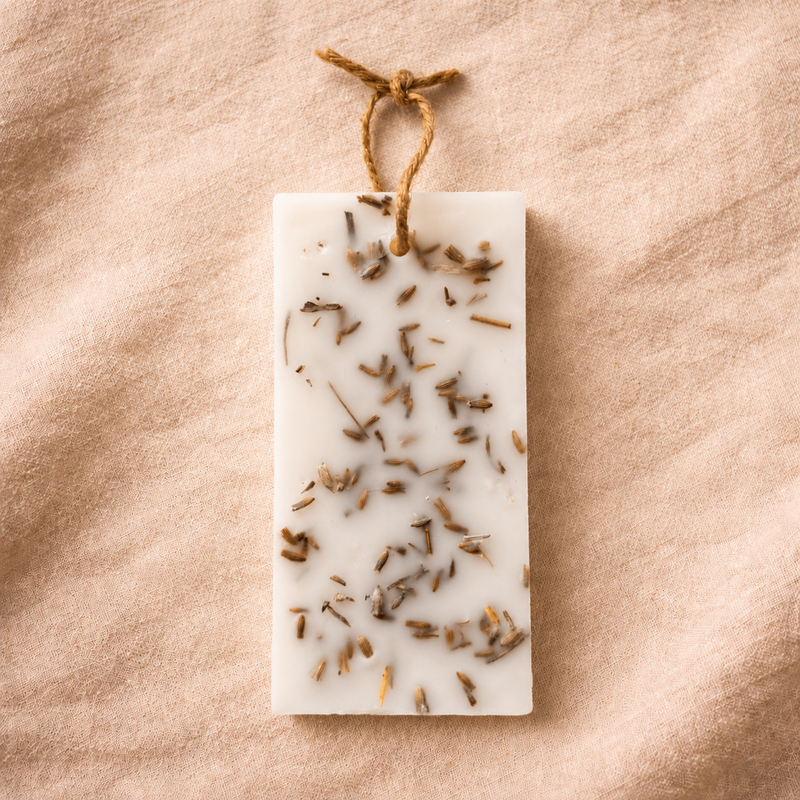
- Match the format to the job. A candle suits an intentional evening ritual, since lighting it becomes part of the cue. A reed diffuser suits passive, always-on conditioning you do not think about. Wax melts work well in a home office, flameless and low effort. A room spray gives instant, on-demand scent for a bathroom or right after a commute.
- Give it real weeks before judging it. Switching fragrances every few days gets you the pharmacological effect without the conditioning, which leaves most of the benefit unclaimed.
If you are still deciding between formats for a given room, our reed diffuser vs candle comparison settles the practical side room by room.
🧪 Find Your Scent and Format
Which scent and format actually fits you?
Two quick questions, then a pairing built on what the research actually supports.
What do you most want to feel different right now?
How hands-on do you want the ritual to be?
Whichever pairing you land on, keep browsing the Signature collection for scents built to work across every format, so a bedroom diffuser and a living room candle can share a fragrance instead of clashing.
📋 The Honest Bottom Line
Aromatherapy is not magic, but it is not nothing either. The direct route from nose to the brain's emotional centres is real anatomy. The activity of linalool and 1,8-cineole is real pharmacology. Conditioned scent association, probably the most underused part of the whole field, is established science.
What it is not is a medical intervention. It will not replace good sleep habits or clinical care for anxiety. As a consistent, deliberate sensory signal alongside those things, it genuinely earns its place.
If you want to go deeper on why a single scent can pull up a whole memory intact, our piece on the neuroscience of scent and memory covers that mechanism directly.
Does aromatherapy actually work, or is it just placebo?
Both, to different degrees. For lavender and rosemary specifically, trials using physiological measures like cortisol and blood compound levels found effects beyond placebo. For many other oils, current research cannot yet fully separate real chemistry from expectation.
Do scented candles work the same as essential oil diffusers?
For mood and conditioning, yes. Both send scent molecules along the same olfactory pathway. The practical difference is atmosphere: a diffuser gives steadier, unattended diffusion, while a candle adds light, warmth and a ritual that can deepen the conditioning effect.
How long does aromatherapy take to work?
Short-term effects, like lavender's calming action, begin within minutes of inhalation. The deeper conditioning effect, where a scent reliably triggers a state on its own, builds over several weeks of consistent, contextually specific use.
Is natural essential oil better than synthetic fragrance for this?
For specific pharmacological effects like linalool or 1,8-cineole, natural oils are more likely to carry the exact compound used in research. For mood and conditioning effects, consistency and scent character matter more than natural versus synthetic origin.
Is aromatherapy safe around children and pets?
With care. Peppermint, tea tree, citrus, eucalyptus, cinnamon, pine and ylang ylang are toxic to cats and dogs even diffused. Ventilate rooms well, keep flames out of reach, and check any specific oil before using it around young children or animals.
What does "therapeutic grade" essential oil actually mean?
Nothing official. No government body or independent organisation grades or certifies essential oils in the United States, so any brand can print the term. Ingredient transparency and production quality matter far more than the label.
Can you get used to a scent and stop noticing it?
Yes, sensory habituation to a familiar smell happens quickly and is normal. The signal still reaches the limbic system below conscious awareness. If it bothers you, use a scent consistently for a few weeks, then take a short break before resuming.
Not sure where to begin? Start with the one thing you actually want different, sleep, focus, or mood, then pick one format and stay with it. Browse the full collection when you are ready.
From the Mikaya studio
-
 Bestseller
 -

-


No questions yet. Be the first to ask.