

Table of contents
Somebody on your feed has told you that your candle is quietly wrecking your hormones. Somebody else has told you that is fearmongering nonsense.
Both camps are working from the same real science and drawing opposite conclusions, because they are quietly arguing about different things: whether a chemical can affect hormones, and whether the amount you actually breathe in your living room does.
Some fragrance ingredients, mainly a class called phthalates, genuinely can interfere with hormone systems. But for most people the dominant exposure comes from food packaging, plastics and scented products applied to skin, not from a candle burning across the room a few evenings a week.
That distinction is the whole answer. It also tells you exactly which of your habits is worth changing first, and it is probably not the one you expected.
🌿 What people actually mean by hormone disruption
Your endocrine system runs on chemical signals. Hormones are released, travel, and lock into receptors that tell cells what to do about growth, metabolism, sleep, stress and reproduction.
An endocrine disruptor is a molecule shaped closely enough to slip into that system and interfere. It can mimic a hormone, block a receptor, or nudge the body into making more or less of something than it should.
Phthalates are the class most often named. The Environmental Working Group describes them as chemicals with endocrine-disrupting properties, present in plastics, vinyl, nail polish, food packaging and undisclosed fragrance.
None of that is in dispute. The argument is about dose, route and how much of it reaches you.
The exposure ranking almost nobody shows you
Here is the part that reframes everything. EWG publishes a practical list of what to change if you want to reduce your phthalate load.
Their list names nail polish, undisclosed fragrance in personal care products, kitchen plastics, vinyl toys, craft paint, vinyl products and air fresheners.
Scented candles do not appear on it.
The same chemical family behaves very differently depending on how it reaches you. Swallowed with food or rubbed into skin twice a day is a completely different exposure from evaporating into a ventilated room for two hours.
This is not a claim that candle emissions are nothing. It is a claim about order of operations. If hormone exposure is what worries you, the plastic container you microwave lunch in is a bigger, cheaper, faster fix than the candle on your shelf.
The safety system itself agrees with that ranking
You can see the logic built into how the fragrance industry sets its own limits. Every fragrance oil is assessed against ceilings that change dramatically depending on how a person is exposed.
Those numbers come from a worked example published by CandleScience using one of its own fragrance certificates.
The system caps skin exposure hard and air exposure barely at all. Not because air is harmless, but because the assessed risk is genuinely lower.
🧪 Phthalate-free and IFRA compliant are two different claims
This is where most product pages quietly mislead, usually without meaning to. The two phrases get printed side by side as if one implies the other. It does not.
Phthalates are a family, not a single chemical. The ones carrying the worst safety record, DBP and DEHP, are largely not the ones used in fragrance. They belong to plastics, vinyl and nail polish.
The one that turns up in fragrance is diethyl phthalate, or DEP. It works as a solvent and a fixative: it dissolves aromatic compounds evenly into wax or a base, and it slows evaporation so the scent holds longer.
An IFRA compliant fragrance can still contain DEP. IFRA sets ceilings on odour-giving ingredients; a solvent used for function sits outside that conversation. Compliance and phthalate-free are separate questions, and a brand can honestly claim one without the other.
The trade in DEP is genuinely contested rather than settled. PerfumersWorld notes on its own DEP listing that it is not prohibited by IFRA or the EU, is prohibited in Japan, and that many global toiletry companies choose to avoid it regardless.
That is an unusually honest summary from a supplier that sells the thing. Not banned, not universally accepted, avoided by many large manufacturers as a precaution.
What removing it actually involves
A phthalate-free fragrance is not the same oil with something taken out. It is reformulated around alternative solvents and fixatives such as dipropylene glycol, isopropyl myristate or triethyl citrate.
That has real consequences worth naming, because nobody selling phthalate-free tends to mention them.
| Claim | What it tells you | What it does not |
|---|---|---|
| IFRA compliant | Fragrance sits within published safety ceilings for its category | Nothing about phthalates, wax or wick |
| Phthalate-free | Formulated without DEP or any other phthalate solvent | Nothing about usage level, allergens or combustion |
| Both, with paperwork | The brand knows its oil source and holds documentation | Still nothing about how you burn it |
Reformulated oils often cost more per gram, and since DEP was doing fixative work, throw and longevity can behave differently. A brand that has switched has usually re-tested its whole range.
The claim is testable, which is why paperwork matters
Phthalate-free is not an unfalsifiable marketing word. Laboratory gas chromatography routinely detects phthalate esters in fragrance down to trace concentrations, which is exactly how researchers find undeclared ones in perfumes.
You will not run that test. But your supplier's supplier can, and that is what a Certificate of Analysis is for. Asking for one is the consumer version of the same check.
So can fragrance cause hormonal problems at all?
Honestly: possibly, over years, mostly through routes other than home fragrance. The evidence on phthalates and hormones is real but strongest for high or sustained exposure, and much of the human research remains associative rather than proven cause. Nobody can tell you a candle caused a specific symptom.
You will find confident answers in both directions online. Treat both with suspicion.
Brands selling "hormone-safe candles" have an obvious reason to make the risk sound urgent and solvable by purchase. Brands selling conventional candles have the opposite incentive. Neither is a neutral narrator, and that includes us.
This is fundamentally a transparency exercise, and it does not in itself require reformulation.
Charles de Lusignan, Global Communications Director, IFRA
He was describing the EU's expanded allergen labelling rules, live since 31 July 2026, which grew the declarable list from 26 substances to 82.
Worth sitting with. The regulation did not conclude those ingredients were unsafe. It concluded that people are entitled to know they are there.
That is the honest position on most of this. Disclosure is the winnable fight. Certainty is not.
What actually changes your exposure at home
Four levers, roughly in order of how much they do.
| Lever | What it changes | Effort |
|---|---|---|
| Scented products on skin | Cuts the highest-absorption route entirely | Moderate, means switching products |
| Ventilation while scenting | Stops particles and vapour accumulating indoors | Low, one open window |
| Buying disclosed fragrance | Removes the unknown from the equation | Low, one question to the brand |
| Format choice | Removes combustion where it is not wanted | Low, flame-free options exist |
Ventilation is the underrated one. Researchers writing in The Conversation this year reported that in poorly ventilated rooms, peak fine particle levels during scented candle use can climb to many times World Health Organization guidance, and take a while to settle.
Small closed room, windows shut, long unbroken burn. That combination does more to your indoor air than any ingredient claim on the jar, and it is the easiest thing on this page to fix.
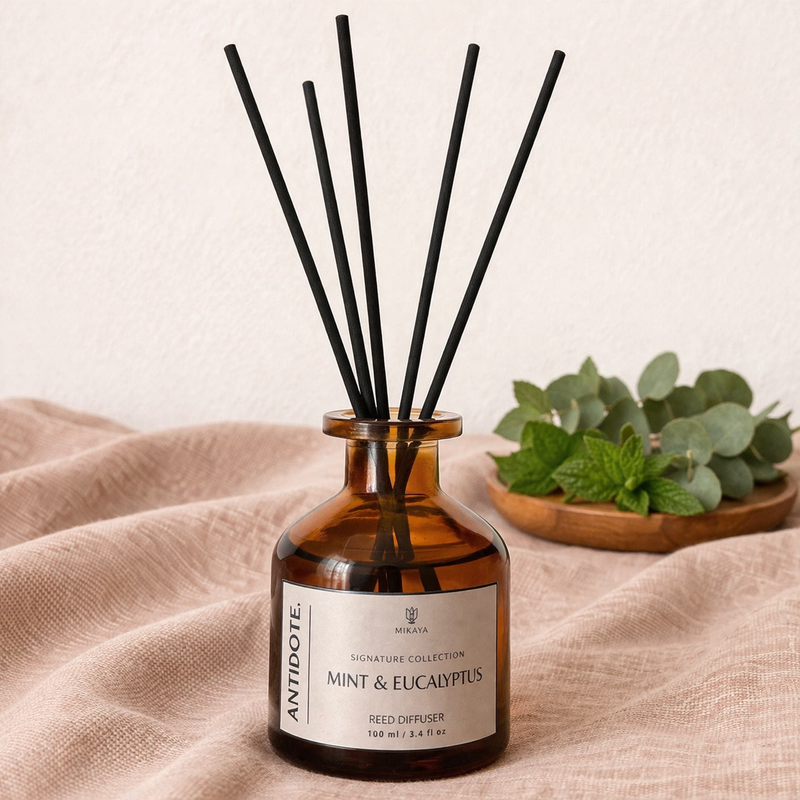
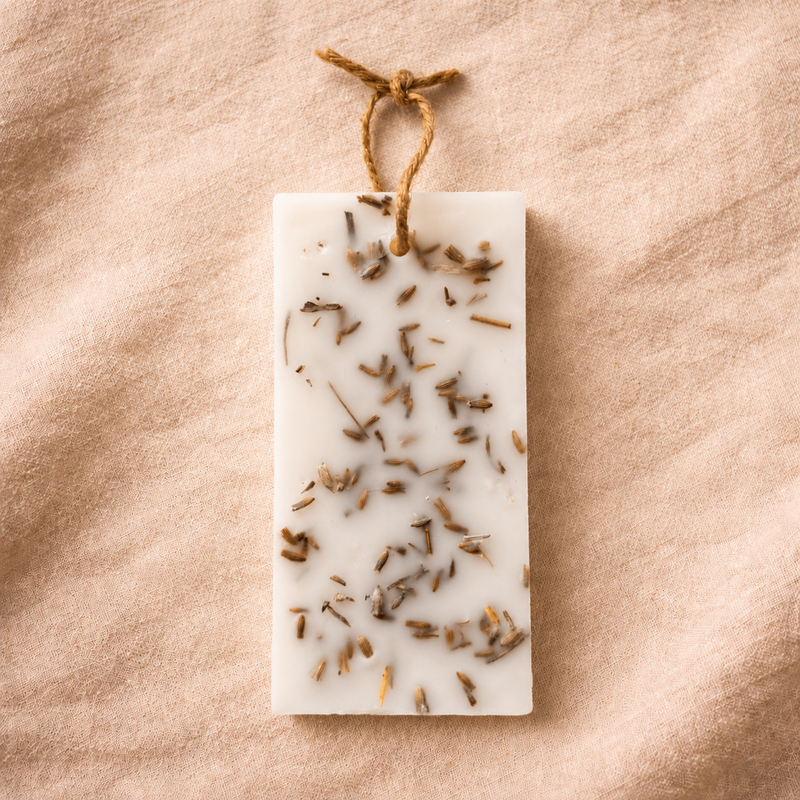
If combustion is the part that unsettles you, that is a solvable problem rather than a reason to give up scent. Reed diffusers, wax tablets and room sprays all work without a flame, and our guide to which format suits which room covers the trade-offs.
How do I tell whether a brand's fragrance is any good?
Ask two questions. Who makes the fragrance oil, and is it phthalate-free and assessed against IFRA safety limits? A brand with real sourcing answers plainly. A brand that bought unlabelled oil from a reseller will deflect, go quiet, or send you a marketing page.
IFRA is the International Fragrance Association, the body that publishes those safety ceilings. Worth knowing two things about it before you treat the phrase as proof.
- IFRA does not certify consumer products and issues no logo, so no jar is genuinely "IFRA certified".
- The claim describes the fragrance oil only. It says nothing about the wax, the wick, or how a candle burns.
It is still a real signal, because a brand can only make the claim honestly if it knows who made its oil and holds the paperwork. That traceability is the thing worth having.
We buy fragrance oils directly from the manufacturer rather than through resellers, phthalate-free, with a Certificate of Analysis for every batch. Ask us for one any time. It is a normal question, not an awkward one.
Which habit is actually driving your fragrance exposure?
If you were going to change one thing this month, this works out which one is worth the effort.
Scented products that stay on your skin: lotion, deodorant, perfume, hair products.
When you burn or diffuse something at home, what does the room look like?
How much do the brands you buy tell you about what is inside?
Who should be more careful than average
The evidence is strongest for developmental windows, which is where caution costs little and may matter most.
- Pregnancy, and anyone trying to conceive.
- Infants and young children, whose systems are still developing.
- Anyone with asthma or a diagnosed fragrance sensitivity, where the immediate issue is airways rather than hormones.
If you fall into one of these groups and you are genuinely worried, that is a conversation for your doctor rather than a candle brand's blog. We can tell you what is in a product. We cannot tell you what your body should be exposed to.
The bottom line
- The mechanism is real, but the dominant exposure routes are food packaging, plastics and skin-contact products.
- The industry's own safety limits treat skin contact as vastly more restrictive than air care.
- Ventilation and frequency do more for you than any ingredient claim on a label.
- Ask who makes a brand's fragrance oil and whether it is phthalate-free. Vagueness is the answer.
- Nobody, in either direction, can give you certainty. Disclosure is what you can actually get.
Questions people actually ask
Can scented candles really affect my hormones?
Some fragrance ingredients belong to chemical classes that can interfere with hormone systems, so the mechanism is real. But exposure from a candle across a ventilated room is far smaller than from products absorbed through skin or ingested with food. No symptom can be attributed to a candle.
What are phthalates and why are they in fragrance?
They are a family of chemicals used as solvents and fixatives, helping a scent last longer. Some are recognised endocrine disruptors. They appear in plastics, vinyl, nail polish and food packaging as well as fragrance, which is why fragrance is rarely the biggest source.
Is phthalate-free enough on its own?
No. It means the oil was reformulated without DEP or other phthalate solvents. It says nothing about usage level, allergens, wax or combustion. Importantly, IFRA compliance does not imply it: a compliant fragrance can still contain DEP, so the two claims must be asked separately.
Are essential oils automatically safer than synthetic fragrance?
No. Natural origin is not a safety category. Many essential oils contain the same regulated allergens that trigger EU labelling rules, and burning natural materials still produces particles. Judge a fragrance on documentation and usage level, not on whether it came from a plant.
Is a reed diffuser safer than a candle?
It avoids combustion entirely, which removes soot and particles from the equation. That is a genuine advantage in small closed rooms. On fragrance ingredients themselves, diffusers actually sit under stricter limits than candles, because you handle the reeds directly.
How often can I burn a candle without worrying?
There is no verified threshold, and anyone quoting one precisely is guessing. Practically: ventilate the room, keep burns to a few hours rather than all evening, and avoid small sealed spaces. Those three habits matter more than the number of times per week.
Everything we sell names its wax and its fragrance sourcing on the listing, across candles and the flame-free formats alike. If a detail is missing, ask. The two checks worth running before any candle purchase apply to us as much as anyone.
From the Mikaya studio
-

-
 Bestseller
 -

 Bestseller


No questions yet. Be the first to ask.